■ Technological core
Our research laboratory develops digital technologies for materials science and industrial applications, integrating simulation, AI/GAI, and digital twin technologies. Leveraging the MACSiMUM AI platform(https://www.macsimum.org/)and advanced digital tools, we provide industry-ready AI solutions, materials design and process analytics, model-based testing and verification, and professional training services. We help materials manufacturers transition from experience-driven development to data-driven R&D through integrated platforms, customized solutions, and AI-enabled optimization. With deep expertise in semiconductor materials and modeling, we deliver digital twin solutions for compound semiconductors and substrate materials, accelerating materials development and process optimization through data-driven and AI-powered innovation.
■ Technical features
▶ We provide easy-to-use machine learning tools that enable users to quickly apply them to realworld
industrial scenarios without the need for programming(No-Code)
▶ We digitize traditional process parameter management and transform it into high–value information
applications to maximize R&D and development efficiency.
▶ By integrating expertise in materials chemistry, compound semiconductors, materials simulation,
artificial intelligence, and other digital design technologies—together with strong data science
capabilities—we deliver customized, integrated solutions that help enterprises accelerate digital
transformation and significantly enhance their competitiveness.

 |
In the real world, physical phenomena do not exist in isolation. Multiphysics simulation captures the interactions among thermal, structural, fluid, and electromagnetic fields, identifying cross-domain risks early and transforming complex physical effects into actionable optimization insights to ensure firstpass design success.
|
|
|
|
 |
The MACSiMUM platform builds materials electronic databases that convert diverse experimental, simulation, and literature data into machine-readable formats, enabling machine learning applications. By integrating multi-scale data—from atomic calculations to process parameters—it overcomes data fragmentation and enhances data reusability.
|
|
|
|
 |
The team integrates materials science expertise with statistical and machine learning methods— including predictive and optimization models—to build dedicated AI solutions from experimental and database data. Results are delivered through intuitive visualizations, enabling formulation simulation, decision support, and operational recommendations to accelerate development, reduce costs, and support energy and carbon reduction goals.
|
|
|
|
 |
Unlike conventional data analytics, we integrate materials domain knowledge with data science to uncover structure–property linkages through feature engineering and machine learning. By replacing physical trial-and-error with simulation-and AI-driven virtual experiments, we build high-fidelity digital twins that accelerate the materials R&D cycle.
|
■ Technology application
|
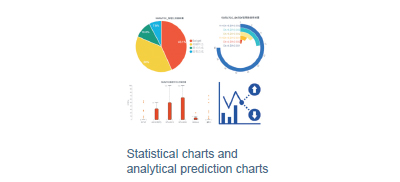
▶ AI-Based Data Analysis, Prediction, and Visualization |
|
We analyze material behavior across scales—from microscopic physicochemical properties and microstructures to macroscopic simulations—and apply data-driven R&D frameworks to accelerate materials development. By integrating simulation, machine learning, and curated experimental databases, we enable property prediction, formulation and process optimization, and rapid new materials design, with results delivered through intuitive visualizations for informed decision-making.
|
 |
|
|
|
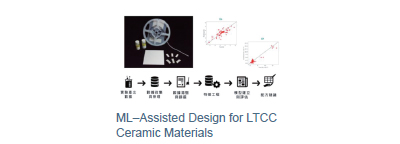
▶ Material AI Application Cases–Access to Materials Domain Expertise |
|
The MACSiMUM platform features 20+ material AI application cases, offering domain-specific AI models and customizable electronic databases to support efficient data management and AI-driven analysis across diverse material fields, including epoxy resins, glass, concrete, composites, and advanced ceramics.
|
 |
|
|
|
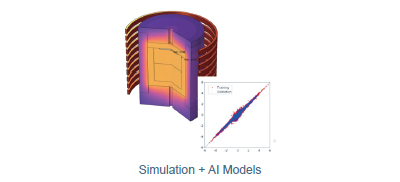
▶ Breaking Wide-Bandgap Semiconductor Development Bottlenecks with Virtual Experiments |
|
For complex crystal growth processes, we integrate multiphysics simulation(COMSOL)with AI to build digital twin systems that model thermal, flow, and mass transport behavior. Through large-scale virtual experiments, optimal growth parameters are rapidly identified, reducing experimental costs and cutting semiconductor materials R&D cycles by over 50%.
|
 |
|
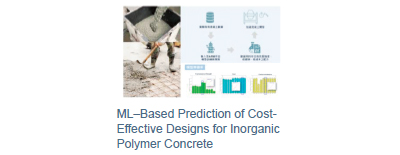
▶ Carbon Footprint and Cost Prediction Using Material Price and Emission Data |
|
Machine learning accelerates mater ials design by predict ing properties and optimizing formulations, reducing experimental time, costs, and raw material variability. It is especially effective for highvalue circular materials, supporting cost control and carbon reduction goals.
|
 |
■ Contact Us
Material and Chemical Research Laboratories
Dept. of Digital Twin Laboratory for Materials (X200)
Tzu-Yu Liu
Tel:886-3-5913363
E-mail:jill.t.y.liu@itri.org.tw